Posing tips for models and photographers
Modern trends in fashion photography inspire and motivate photographers and models to adjust their style and learn new techniques. Fashion magazines now show more natural moods, poses and retouching. How to create stylish shots in the new realities of the fashion world? How can models pose “without posing”, naturally and effortlessly? How can a photographer work with and manage a model? As an exclusive and professional photographer, I am pleased to share my experiences, techniques, and secrets for working with private clients and models to shoot for brands. By following these simple guidelines, you can easily create stunning photos worthy of glossy magazine covers.
Most private clients and young models treat the shoot as an exam. One that they must not fail, and one that I, as a strict professor, must accept from them. I often tell my clients before the shoot, “Today you DO NOT have an exam. We are all here to live this day positively, relaxed and joyfully. And get great photos as a result!”))
Clients say they don’t know how to pose. They are afraid of the camera. They don’t feel comfortable. They don’t always like themselves in photos. If you are reading this and recognize yourself, know that you are definitely not alone in this world! Your fears are completely normal, there are many people like you.
To all this, I reply that the client is here with me today to change what he or she came with. To try something new, to have an unusual and exciting experience. Which can change a lot in life, starting with love and attitude towards oneself. I say that the camera always sees the truth. And that the best way to get beautiful photos is not to try to play alien roles, but to show oneself as real, beautiful, full of energy and unique emotions.
Some people have a natural talent for feeling their body and being organic in the frame. There are those for whom it is more difficult. One person can be completely free, but as soon as I point the camera at her, she turns into a statue)) This state is overcome by a great desire to get beautiful photos and a positive, relaxed contact with me as the photographer. The person in the picture and I are always 50/50% responsible for the beautiful result. She with her moods, I with my ability to help her reveal them and capture them in the moment.
“What should I do with my hands?”
This is the most common question from novice models and private clients at the beginning of a photoshoot. I always try to start the shoot with poses that are comfortable for the model. Every model in the frame needs time to “warm up”. Professionals – less, beginners – a little more.
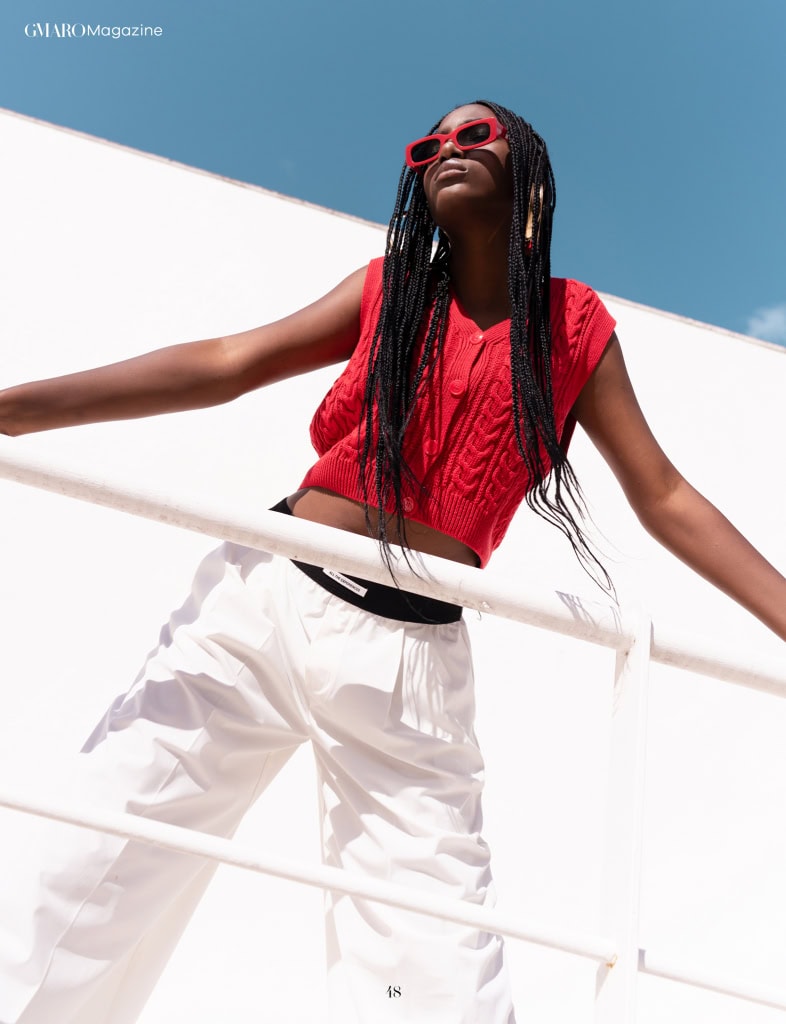
If it’s an urban shoot, find a place where the model can sit or stand with her hands on a surface or object. This relaxes the body, fixes it for the right seconds and relaxes the shoulders. At the same time, try to take basic classic photos with both hands in the frame. The model can easily balance her body, move from side to side, and change the direction of her head. At the same time, the hands and the general mood of the model will be relaxed.

Whether you are shooting on the beach or outdoors, the technique is the same. Invite the model to sit on a sand or rock with her back relaxed and both hands touching the ground or an object. It is ideal to have a rock or other large object behind her back. Again, this does not mean that the pose should be static. The model can easily move her body, legs, change the direction of her back, turn or tilt her head.

If the model doesn’t know where to put her hands during the shoot, give her something to hold on to – a bag, glasses, cell phone, magazine, bicycle. More on this in the accessories section below.
Movement
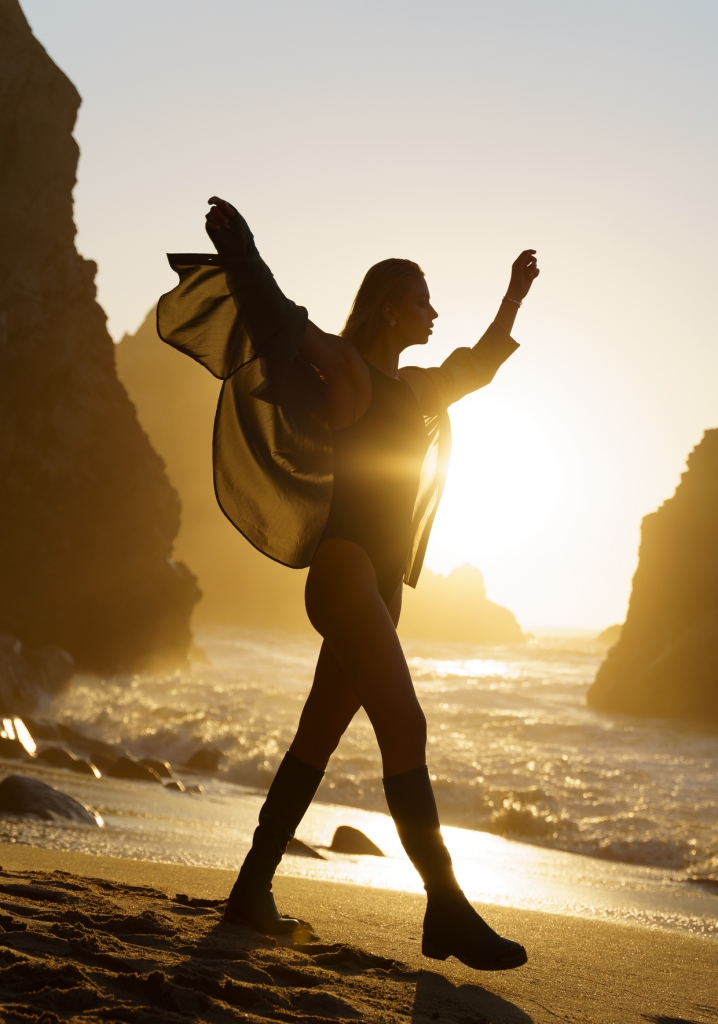
The first stage of the shooting was a success. The model has warmed up, gotten used to the camera and the photographer, relaxed, and is now ready to experiment. Now is the best time to ask her to move. The easiest way is to ask her to walk. There are some simple secrets of how a photographer can get a beautiful shot in motion.
- The direction of the model’s movement. Ask the model to take 5-7 steps away from you and, on your command, walk left, right, diagonally, directly toward you, or away from you. It is up to you whether you want to take full-body or half-body shots. The model can look not only straight ahead, but also to the side.
- Speed. Ideally, the model should move at a medium pace, close to real life. Walking too slowly makes the body look taut. Walking too fast with wide steps is good for glamorous magazine shots. A medium pace is an opportunity to get good shots. Also, pay attention to the model’s facial expression while walking. The energy of the frame depends on the model’s mood.
- Photographer’s movement. As the photographer, you can either stay put and follow the model’s movement with camera rotation and zoom. Or you can try to move with the model (using the correct camera settings for this technique). This allows you to create a shot with a sense of real movement.
- Elements of clothing and accessories in the frame. What exactly gives the photo the effect of movement? The way the body looks. The movement of the hair. It’s great if the model has long hair and a flowing hairstyle. That’s half the success. A long flying dress, scarf, bag and other elements that move with the model in the frame also help to make a stylish photo.

Accessories and other items
Street-style photography looks even better when you believe in the story. A simple tip is to use accessories or other objects. If the model is holding a bag, it can become a beautiful accent in the frame. The bag can be opened, slung over the shoulder, carried by the strap or held in the hands. The same elements can be glasses, magazine or newspaper, fruit, cell phone and other things. The only limit is your imagination. This technique allows you to create a real story in the frame. The model plays a role from real life and therefore looks very natural.

Breathing
At every shoot I do, I remind my models to… breathe. I usually say this as a joke, which relaxes the atmosphere even more: “By the way, I forgot to tell you that you can still breathe during our photo shoot!”. If I see that the model is too stiff, I will pause the shoot and ask her to take a deep breath. Like in a yoga class – inhale, exhale, inhale, exhale. It’s calming and relaxes the model’s shoulders and neck. The most natural pose in the frame is the most beautiful.

Speed matters
I’ve often heard from fellow photographers that the way to get a cool shot is for the model to be actively moving. Professional models are especially good at this because they are trained to continuously change poses within seconds. One-two-three-four… Over the years as a photographer, I’ve found that this rule doesn’t always work. For example, I don’t like it when a model is in a hurry, so I stop her or ask her to slow down. If you are a beginner model, your attempts at frequent changes and an active rhythm will only trip you up. Private clients and aspiring models are troubled by thoughts of how to pose and move. This leads to anxious facial expressions in the frame, nervous micro-body movements, and a complete lack of creative flow. A technique that definitely works is to slow down, calm down, and move as you would in life. Music often helps me on set. I choose a tune based on the mood of the shot. The right music helps the model get into the right rhythm. Often people in the frame start dancing slowly. This helps to create beautiful and natural photos.

Full-Body Photo
One of the most difficult shots to take is a full-body picture. And I’m not talking about moving, walking photos. I’m talking about an almost static shot. How to make it beautiful?
The model should really feel beautiful and confident. And if she doesn’t feel that way, the photographer’s help is important. I use a simple technique – I show the model one or more shots I’ve taken. And I accompany it with praise for her work, her movements and her beauty. The model sees how cool she looks in the frame, becomes more confident and starts to enjoy the process. The quality of my photos increases in direct proportion to the model’s growing self-esteem.
I often ask models to stand very comfortably and put weight on both legs. Stability is one of the most effective techniques for a successful photo. In this case, the arms can be moved back or placed at the waist. This will enhance the silhouette. Another technique is to shift the weight of the body to one side. It’s like a dance. This pose allows the model to relax and think less.
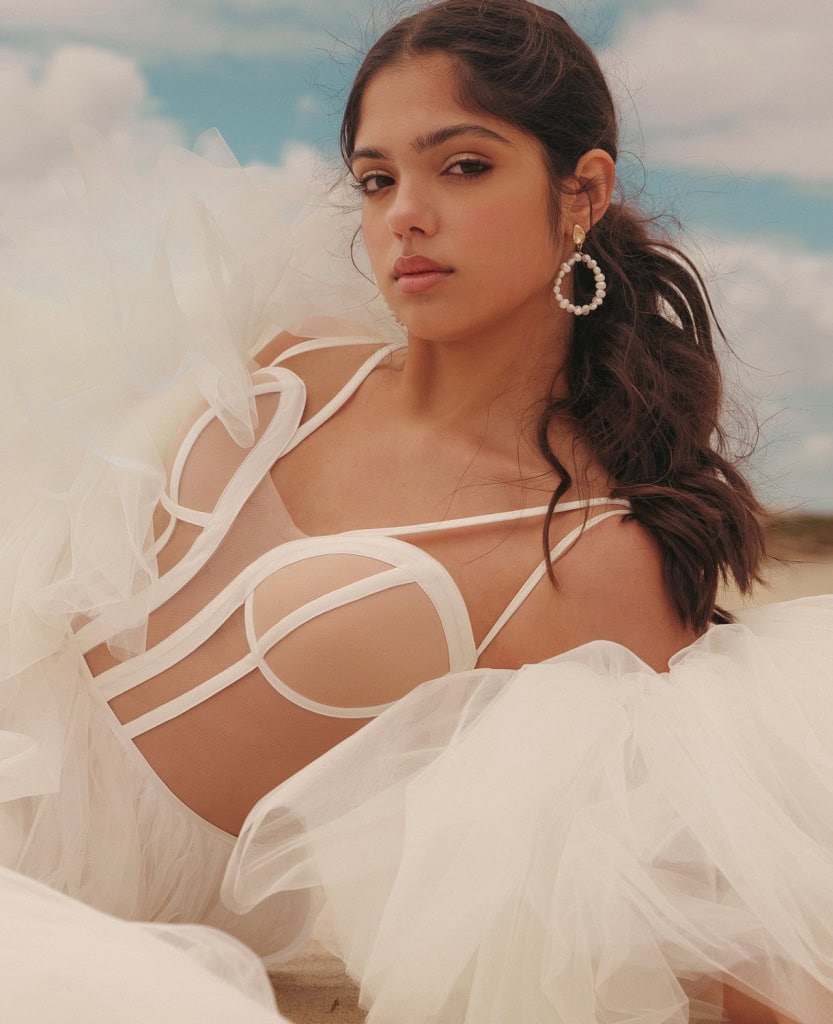
The last but not least secret is to turn the model three-quarters towards the photographer. This technique gives a beautiful curve to the body, hiding some imperfections of the body and face, if any. For example, for one of our wedding dress brand campaigns, we often shoot models in three-quarters. It really allows to show the silhouette of the body more beautifully, to emphasize the curves, as well as to show the style and texture of the fabric.


Posing for a Portrait
One of the most important rules for a beautiful portrait is to pose the model’s entire body, not just her face. Even if you are only shooting her face, her back, arms, and whole body makes a huge difference. A beautiful back gives the perfect position for the chin. And a confident and comfortable pose conveys relaxation and the right mood. The model’s eyes are what attracts the viewer’s attention. Makeup and hair (which I do for my models myself as a makeup artist) and accessories are also very important. The picture in the frame has to be complete, every detail has to be perfect. Having worked as a makeup artist for many years, I am used to pay attention to every detail during the shoot. It could be an inaccuracy in the makeup, a hair on the face, an unnecessary crease in the clothing, a sticking label or a speck of dust. I can often fix all of these things in seconds during the shoot, so I don’t have to do it later in Photoshop. A lot of photographers rely too much on retouching programs, but Photoshop isn’t magic, and it’s often difficult or impossible to fix mistakes. So one of my main rules is that if it can be done on location, do it on location.
For me, a beautiful portrait is first and foremost about energy. And the right level of energy and state of mind doesn’t come right away. One of my tricks is that I often shoot portraits at the end of a photo session. The first few minutes of the shoot are for the model to relax and get ready for the shoot. The model should feel comfortable with the camera, get the right mood, feel the atmosphere. After about 20-40 minutes you can start taking portraits. If you have 3-5 or more looks during the whole shoot, do portraits at the end of each series.

Constant learning and practicing
It is impossible to learn how to pose beautifully and professionally 1) without studying the experience of professionals and 2) without practicing the knowledge gained.
The Internet is now full of useful materials. I’ve collected some helpful and diverse videos about posing. I hope they will inspire you to create more interesting, stylish and beautiful looks and shots.
And the practice is 100% up to you!)
I hope you found this information useful! If you have any questions, would like to share your ideas with me, or have already decided to inquire about our photo and video projects for you or your brand, choose a convenient way to contact us right now! 💛
Author: Julia Yatel